I was working with a small nonprofit where the executive director, the grant writer, and the board members were all operating with different pieces of the picture. The ED was in one state, the same state as the nonprofit, but not located locally. The grant writer was in another state entirely. With remote work becoming more common, especially as Covid normalized distributed teams, this kind of setup wasn't unusual. Everyone was working hard and everyone cared. But I noticed a disconnect between what each of them understood about the organization's financial health, and I don't think any of it was intentional. It was just the natural result of a distributed team with no shared, centralized view of where things actually stood.
That disconnect has consequences. It leaves the grant process with gaps, sometimes small ones, sometimes not.
In this case, the grant application came back declined. But a counter grant was offered, a smaller amount with different terms. And that result opened up a set of questions that nobody had a clean answer to. Why was the original amount not approved? What were we missing? What were they looking for that we didn't clearly demonstrate? Were there signals in our financials that gave the funder pause, signals we weren't even aware of?
Those questions didn't have easy answers. Not because the people involved weren't capable, but because nobody had the tools to see what the funder was likely seeing when they reviewed the application.
A Structural Problem, Not a People Problem
That moment stayed with me longer than I expected.
My role that last year was fundraising coordinator, and it gave me a front-row seat to both sides of the funding equation. The internal conversations about where the organization stood, and the external work of making the case to funders. What I kept bumping into was the space between those two things.
I've spent years in corporate program management, the kind of environment where dashboards, data, and structured decision-making are just the cost of entry. I came into the nonprofit space with that same expectation. I assumed there were equivalent tools. There mostly aren't.
One thing that mattered deeply to me in that role was making sure the board was making decisions with all of the information in front of them. And here's the thing: I don't think anyone was purposely keeping information from them. It's that board members often don't know what to ask. If you've never run a nonprofit, you may not know which financial signals actually matter, or what a funder is quietly evaluating when they review your 990. The gap isn't usually bad intent. It's just missing infrastructure.
This matters more than people realize, because a nonprofit board carries real financial responsibility. Board members have a fiduciary duty to the organization, which means they are legally and ethically responsible for overseeing its financial health, ensuring resources are used appropriately, and making decisions that keep the organization sustainable enough to fulfill its mission. That is not a passive role. But it is nearly impossible to fulfill well without accurate, accessible financial information. A board that does not have the full picture is not just uninformed. It is limited in its ability to do the job it is there to do.
What I found was a sector running on incredible dedication and genuinely thin margins of time, money, and information. Grant applications built on incomplete pictures. Boards making funding decisions without the financial context to evaluate them. Everyone working hard, but the data not flowing the way it should.
What passed for financial tracking was often a spreadsheet. And I want to be clear: some of those spreadsheets were impressive. People had built elaborate, carefully maintained Excel files to manage what they could. But it was manual work, and manual work takes time, and time in a nonprofit is one of the scarcest resources there is. Every hour spent maintaining a spreadsheet is an hour not spent on programs, on donor relationships, on the mission itself. Both things matter. That tension is real and I never lost sight of it.
The more I looked, the more I realized this wasn't one organization's problem. It was a structural gap.
Back in 2017 I was at a crossroads in my own work life. I had just come off a corporate layoff and was in that uncomfortable space of figuring out what came next. My heart kept pulling me toward nonprofit work. It does that to a lot of people, and I think if you have spent any time in that world you know exactly what I mean. There is something about the mission that gets into you.
But I had a family that depended on me financially, and the reality I kept running into was the same one a lot of people hit: nonprofits don't pay much. I heard it over and over. And as much as it was not the answer I wanted, I had to make the choice that was right for my family at that time.
So I stayed on the corporate side. But I kept my toe in the nonprofit world. Over the years I served on different boards, staying connected to the sector even when I could not be in it full time. Then about three years ago I added a part time nonprofit role on top of my already full time corporate job. The first two years were as a volunteer. That third year was when I stepped into the fundraising coordinator role, and that is where this story really begins.
And honestly, that experience of being on the outside looking in for so long, of wanting to contribute to the sector but having to find a different way in, made me more aware of what nonprofit teams were carrying. I understood the budget constraints. I understood that asking an organization to spend money on another tool is a real ask. That is part of why I built EvergreenIQ the way I did.
My corporate program management background is probably why I couldn't just let that sit. That kind of work trains you to start from the customer and work backwards: identify the real problem before jumping to solutions, get specific about what "better" actually looks like, and then figure out how to build toward it. So that's what I did. I knew what the person on the other side of this gap needed. I knew what I'd want it to look like if I were that ED, or that grant writer, or that board member trying to make a good decision. And I knew that somewhere, the underlying information existed. It was just inaccessible. That combination, a clear problem, a clear vision, and data that was already out there waiting, made it hard to walk away.
Why IRS Form 990 Data Holds the Answer
IRS Form 990 data is public. It's been public for years. For anyone with the time and technical know-how to dig into it, the signals are there: revenue trends, reserve ratios, audit indicators, concentration risk. The problem is that most nonprofit leaders aren't data analysts, and they shouldn't have to be. They should be running their programs.
I kept thinking: someone should build the thing that closes this gap. A tool that takes that public data and translates it into something useful, something that tells a nonprofit leader where they stand, what a funder is likely to see, and where the vulnerabilities are before they become crises.
Eventually I stopped waiting for someone else to build it.
The Story Behind the Name
People ask me about the name, and honestly I love that question. I named it after my Papa.
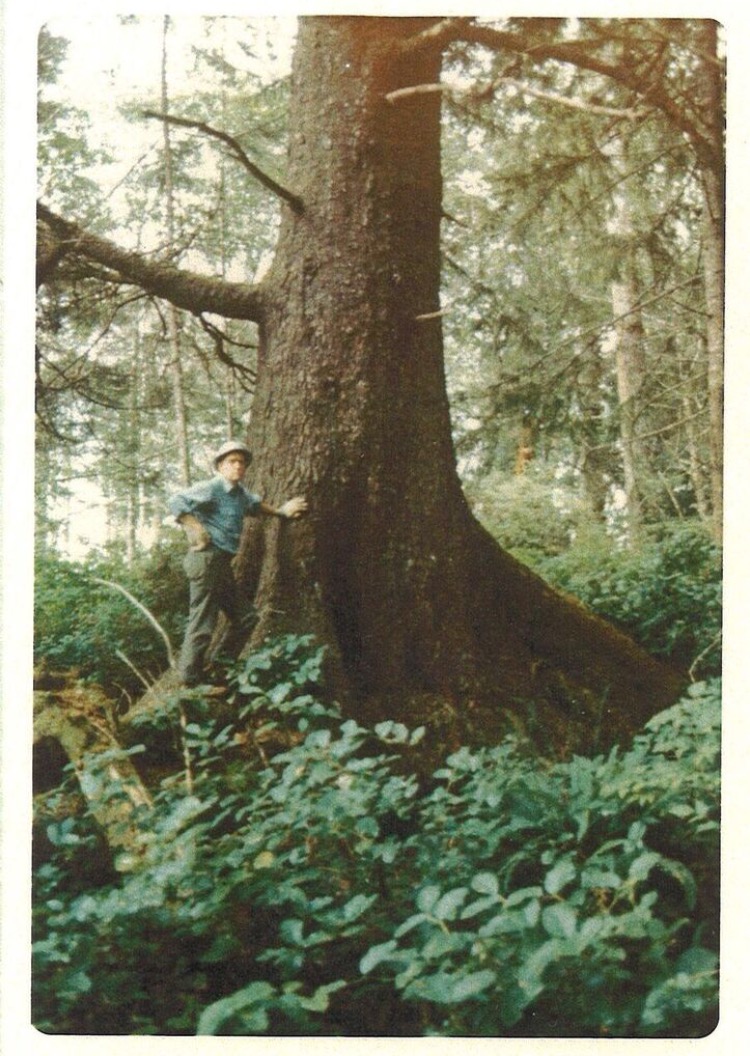
My Papa worked in forestry. In my eyes he was the best person on the planet, and he was well known in that community. He spent his time in tree farms, doing quiet, unglamorous work toward making the earth a better place. When I think of an evergreen tree, I think of him first. And then I think about what that tree actually does: it weathers storms, keeps growing, stays resilient in conditions that shouldn't always support it. That felt like exactly the right metaphor for the nonprofits I wanted to serve.
But "evergreen" also means something in the business world I come from. An evergreen document is one that gets updated as things change, a living thing rather than a snapshot. A process that stays current. That's exactly what good financial intelligence should be.
So the name holds all three things at once: the resilience of the tree, the living nature of useful data, and a quiet nod to the person who taught me what it looks like to just keep showing up and doing good work.
Building EvergreenIQ to Close the Gap
EvergreenIQ is what I wish had existed in that room.
It takes IRS 990 data, already public, already out there, and translates it into something a nonprofit leader can actually use. A financial health picture. A sense of where the vulnerabilities are. The kind of context that lets a board ask better questions, and lets a grant writer position an application with confidence instead of hope.
I'm not trying to turn nonprofit leaders into finance analysts. I'm just trying to make sure they don't have to walk into important conversations blind.
Clarity for the Organizations That Need It Most
What I hope EvergreenIQ brings to people is something pretty simple: the ability to walk into a funding conversation, or a board meeting, or a grant application, knowing exactly where you stand. Not guessing. Not hoping the numbers look okay. Knowing.
Because the organizations doing the most important work in our communities deserve that clarity. And the people who fund them deserve to be able to see it.
Just like the evergreen tree, this tool will grow and change with the needs of the people who use it. Shaped by the passion that nonprofit employees, volunteers, board members, and grant writers bring to their work every single day. The shared belief that the mission is worth fighting for, worth funding, and worth growing. That is what I am building toward.
If any part of this sounds familiar, I'd love for you to take a look around. Start with our guides on what a healthy funder mix looks like, how to reduce funder dependency, or what board members should review on the Form 990.